Bridge Tool: Create Your Poetic Perspective
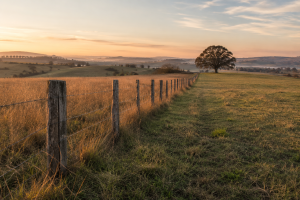
Create Your Poetic Perspective
A Perspective Activation Initiative for Libraries and Community Spaces
Executive Summary
Create Your Poetic Perspective is a Perspective Activation Initiative that helps visitors discover that their way of seeing the world has value – and that creativity begins with noticing.
Using ordinary images, multiple poetic responses, and a simple participation pathway, visitors move through a progression:
See → Recognise → Choose → Create → Share
Poetry is the initial medium, but the underlying framework applies equally to storytelling, local history, photography, reflection, visual art, and other community activities.
The initiative does not teach poetry. It creates conditions in which creativity, participation, and perspective-taking naturally emerge – and in which each new contribution subtly reshapes the shared field of perspectives.
Core Principle
A single image can generate many valid perspectives. When visitors experience this directly:
- They become aware of how they see.
- They recognise that others see differently.
- They discover that difference is not disagreement.
- They begin to see themselves as capable of contributing their own perspective.
Each poem becomes part of a growing mesh of interpretations. Visitors respond not only to the image, but to the presence of other perspectives – gently entering a relational field where meaning evolves as more voices join.
Conceptual Seeds (Access Points)
A conceptual seed is a short, self‑contained moment drawn from a full poem. It acts as a zero‑effort entry point into a complex poetic landscape. Snippets are not summaries and not explanations. They are doorways.
A conceptual seed is chosen because it:
- captures a single felt moment
- stands alone without requiring context
- resonates directly with the image
- invites the visitor into the perspective field
- allows the full poem to remain intact and unaltered
Conceptual seeds make poetry accessible to everyone — children, elders, non‑poets, people who do not visualise easily, and visitors who may feel intimidated by longer or more complex works. They reduce cognitive load while preserving emotional depth.
What Conceptual Seeds Do
Conceptual Seeds create a clean three‑step experience:
- Image → Feeling
- Conceptual Seeds → Recognition
- Return to Image → “Ah‑ha”
The full poem is available later, once curiosity has been activated. This preserves emotional continuity and prevents the back‑and‑forth oscillation that can make poetry feel like an intellectual exercise.
Why Conceptual Seeds Matter
Conceptual Seeds allow complex poems to be used without requiring visitors to navigate their complexity. A poet may write a layered, abstract, or deeply personal piece — and a single moment from that poem becomes the visitor’s entry point.
This maintains:
- poet dignity
- poet voice
- poet craft
- visitor accessibility
- relational parity
Design Note: Selecting Conceptual Seeds
During development of the initiative, the initial assumption was that the poet would naturally know the strongest conceptual seeds from their own work. To test this, one of the sample poems was analyzed for possible entry points.
Four different conceptual seeds were identified. When each was evaluated from the perspective of a first-time visitor rather than the poet, the originally selected conceptual seed was not the strongest entry point. Another conceptual seed provided a clearer and more immediate connection to the image.
This highlighted an important distinction: writing a poem and selecting an entry point into that poem are different design tasks. Both require judgement, but they optimize for different outcomes. The poem preserves the complete creative work; the conceptual seed lowers the threshold for someone encountering poetry for the first time.
Why This Matters
Many people believe creative activities belong to specialists:
- Poetry belongs to poets. Art belongs to artists. Stories belong to writers.
- This belief prevents first steps.
By showing multiple responses to the same image, the initiative reframes creativity as noticing, not expertise. Visitors discover:
- “I notice things too.”
And from there:
- “I can express what I notice.”
As they do, they also see how their noticing sits alongside others’ – a soft introduction to second‑order perspective formation.
Sought Outcomes
The initiative is designed to produce movement, not just outputs.
- Perspective Expansion – One shared reality, many interpretations.
- Identity Activation – Visitors begin to see themselves as creators.
- Agency – Participants make choices throughout the experience.
- Community Connection – Differences become visible without competition.
- Creative Participation – Poetry becomes approachable because it begins with noticing.
- Repeatable Learning – The framework can be reused across subjects and activities.
- Relational Awareness – Visitors sense how their perspective contributes to a shared field.
The Visitor Journey
Step 1 – See
Visitors encounter a collection of ordinary images:
- A path
- A coastline
- A tree
- A fence
- A cloud
These images demonstrate that meaning can be found in everyday experience. They also create a shared starting point – a seed from which many perspectives can grow.
Step 2 – Recognise
Visitors see conceptual snippets from multiple poetic responses to the same image. No snippet is presented as correct. The display shows that different people notice different things.
Visitors begin to sense the relational field: each snippet subtly shifts how the image feels, and how the next perspective might emerge
Step 3 – Choose
Visitors select an image that attracts their attention. This is the first creative act – a moment of agency.
The question shifts from: “What am I supposed to see?” to: “What do I see?” and quietly, “How does my seeing sit among these other ways of seeing?”
Step 4 – See the Full Original Poems (Optional)
If the display contained conceptual seeds, visitors can later see the full poems and the images again — on the reverse side of the display or in another part of the room.
This preserves the emotional-first experience while offering deeper exploration.
Step 5 – Create
Visitors create a short poetic response:
- A word.
- A sentence.
- A reflection.
- A poem.
Any contribution is valid.
Their poem becomes both:
- A perspective on the image
- A perspective within the mesh of existing interpretations
This is second‑order perspective activation – offered gently, without instruction.
Step 6 – Share (Optional)
Participants may:
- Keep their work private
- Take it home
- Display it publicly
- Share digitally
Sharing allows their perspective to enter the communal field, but the initiative remains invitational.
The Activation Zone
The Image Collection
A small set of seed images is displayed together. They reinforce the message:
One image → many perspectives Many images → many possibilities
Each new poem subtly reshapes the field around the image.
The Mirror
A mirror sits at the centre of the activation area.
Suggested wording: Now Be the Poet Create Your Poetic Perspective
The mirror signals the shift from observer to contributor – from seeing perspectives to entering the mesh.
The Worksheet
Visitors receive a take-away worksheet containing multiple images and gentle prompts. Choice is intentional – it is the first step in creative agency.
The worksheet may include:
- Several images
- Light prompts
- Blank space
- Starting phrases
- A QR code linking back to the initiative
Optional closing line:
“When you complete your poem – whether one word or one hundred – it is yours. Put your name to it and see what you have done.”
This reinforces identity activation and acknowledges the visitor’s new place in the perspective field.
Subtle Perspectives in the Initiative
Why Ordinary Images?
Ordinary images ground the experience in everyday reality. The goal is not extraordinary scenes, but extraordinary perspectives emerging from ordinary things.
Some images may reflect how we remember rather than how we see – softened exposures, blended moments, impression over instant. These images honour the truth that memory holds shape, not detail.
They invite visitors to look again at the ordinary as a field of possibility – and to notice how others have looked as well.
Guidance for Image Selection
The journey must begin cleanly. Images must be relatable, accessible, and free of interpretive hierarchy.
Poets do not supply the images. They respond to them – just as visitors will.
This maintains parity and preserves the relational mesh.
The Role of Poets
Local poets provide example responses, but the initiative is not a poetry showcase.
Poets serve as activators. Their work demonstrates possibility, not authority.
Each poem becomes a doorway – and also a branch in the growing network of perspectives.
Guidance for Poets
Share what you notice. Let the reader walk with you – from the first moment the image meets your eyes, through the feelings it stirs, to the shape it becomes in your poem.
Your poem does not stand alone, nor is it a definitive or “correct” interpretation. It is a single, vital coordinate in a growing mesh. Read the other poems assigned to your image – not to compare or compete, but to see how your perspective sits alongside theirs, balancing and enriching the field for the visitor to enter.
Your audience is everyone – from children to elders. Your language must land for all.
You are ambassadors of perspective. Your poem is a doorway into a world many readers have never entered – and a gentle thread in the mesh they are about to join.
Conceptual Seeds
To increase the accessibility of poetry use a small conceptual snippet for the Step 2 display, the full poem can be displayed at the optional step 4.
The curator selects the conceptual snippet that best supports the visitor journey while preserving the poet’s voice and intent. An alternative selection method is to have other poets select the seeds – if this initiative is being done by a group of poets then, to help choose more neutrally, try and to avoid using a friend to do the selecting of the seeds.
A sample photo, a poem and conceptual seeds
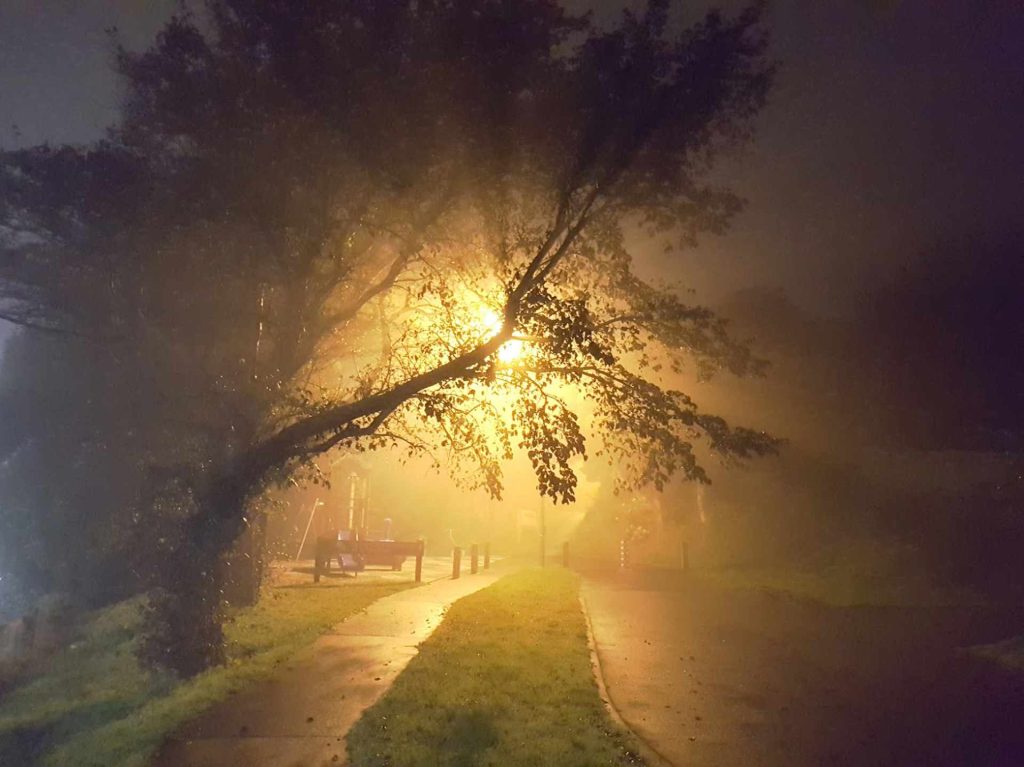
Poem
Timeless Fog
That warm glow on a still cold night
nothing quite seems real
The fuzzy edges, the indistinct
Time starts to slow
With fog about the air so still
And time, it seem to stop
And … I … step to break that spell
and time … resumes
Possible Conceptual Seeds
That warm glow on a still cold night
nothing quite seems real
or
That warm glow on a still cold night
nothing quite seems real
Suggested Pilot Implementation
A typical library pilot includes:
- 3-6 everyday photographs (at a time)
- 2–3 poems per photograph or 3-8 conceptual seeds
- A visitor pathway
- A mirror activation point
- Multi-image worksheets
- Optional submission space
- QR-linked digital participation
Duration: 2–6 weeks Participation: Drop-in, self-guided Staffing: Minimal after setup
Measuring Success
Success is measured by movement, not volume.
Indicators may include:
- Visitors stopping and engaging
- Conversations about differing interpretations
- Worksheets taken
- Contributions returned
- Expressions of curiosity
- Visitors saying “I could do this”
- Repeat participation
- Interest in future creative activities
- Visitors noticing how their perspective relates to others
Future Applications
The underlying pattern remains:
Shared Seed → Diverse Perspectives → Personal Contribution → Relational Field
This framework can be adapted to:
- Storytelling
- Local history
- Memoir
- Photography
- Drawing
- Community memory projects
- Reflection exercises
- Intergenerational programs
- Educational activities
Closing Thoughts
Create Your Poetic Perspective is not a poetry lesson. It is a Perspective Activation Framework.
It creates a space where people discover that their perspective matters – and where each new perspective quietly reshapes the shared field.
Poetry may emerge. Creativity may emerge. Connection may emerge.
The initiative does not seek a single outcome. It creates conditions from which many valuable outcomes can grow – individually, collectively, and relationally..